

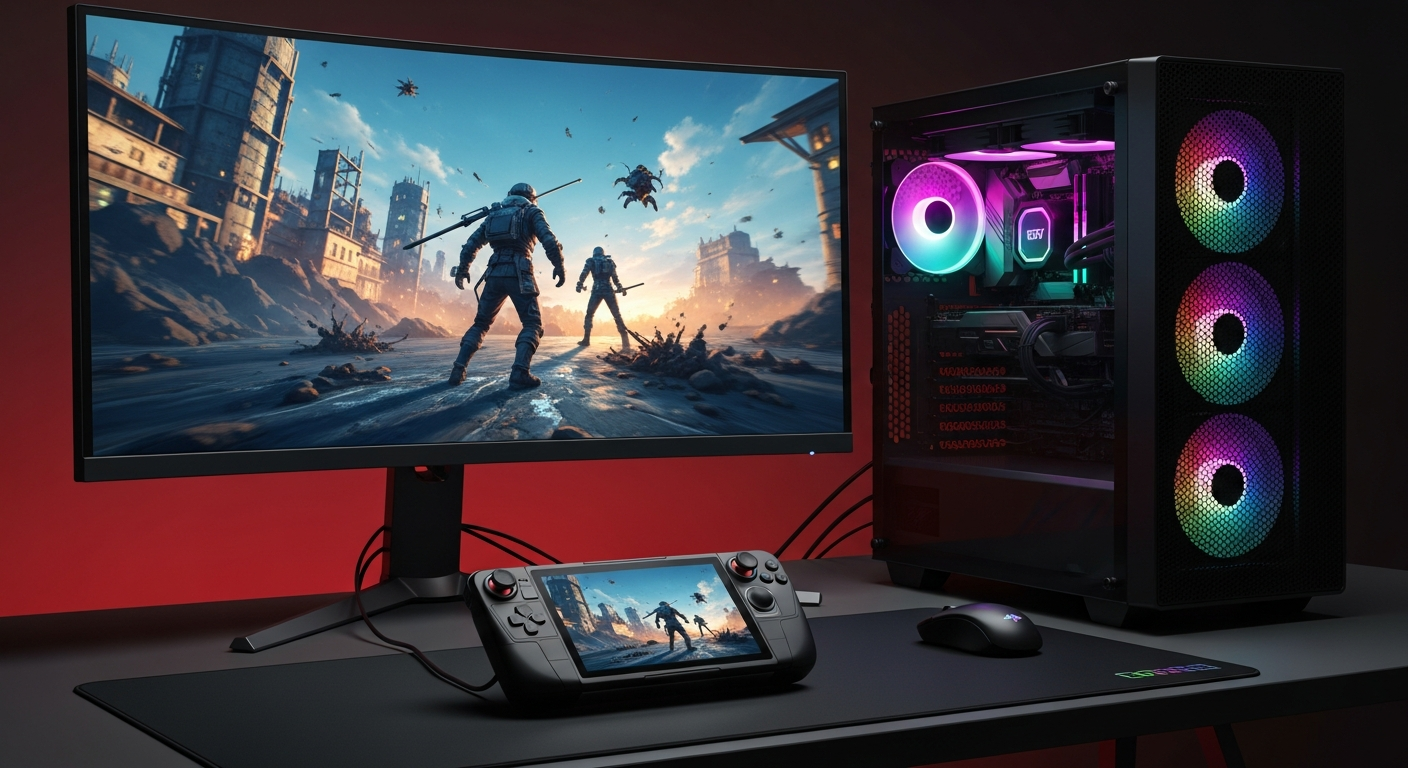
A modern gaming PC, whether a high-end desktop for ultrawide displays or a portable handheld, demands carefully selected components like a powerful GPU, sufficient RAM, and optimized displays to deliver fluid, immersive gameplay.
Table of Contents
In the dynamic world of gaming, the heart of any truly immersive experience is a robust gaming PC. From high-powered desktop beasts driving stunning ultrawide monitors to versatile handheld devices, your choice defines your digital playfield.
The Core of a Desktop Gaming PC: Unmatched Power
For those craving the highest fidelity and frame rates, a desktop gaming PC remains the ultimate choice. It's the robust engine that powers advanced displays and delivers uncompromised performance for the most demanding AAA titles.
- GPU (Graphics Processing Unit): The single most crucial component; dictates graphical fidelity, resolution support, and frame rates. High-end cards like the potential RTX 5080 are essential for saturating ultrawide, high-refresh-rate monitors.
- CPU (Central Processing Unit): Vital for processing game logic, AI, and physics, ensuring smooth operation even when running demanding background applications alongside your game.
- RAM (Random Access Memory): A minimum of 16GB is recommended for modern gaming, with 32GB becoming increasingly beneficial for future-proofing and multitasking, ensuring quick access to game assets.
- Storage (NVMe SSD): PCIe Gen4 or Gen5 NVMe SSDs are critical for lightning-fast game loading times, seamless texture streaming, and overall system responsiveness, far surpassing traditional HDDs or SATA SSDs.
- Cooling System: High-performance CPUs and GPUs generate significant heat; efficient air or liquid cooling is essential to prevent thermal throttling and maintain optimal performance during extended gaming sessions.
- Power Supply Unit (PSU): A reliable, appropriately-wattage PSU ensures stable and sufficient power delivery to all components, especially during peak loads, preventing system crashes and component damage.
Your Window to Worlds: Gaming Monitors
A powerful gaming PC demands a display that can fully showcase its visual prowess. Ultrawide monitors, in particular, offer an expansive and uniquely immersive field of view for a truly cinematic PC gaming experience.
- High Resolution: QHD (1440p) or UHD (4K) resolutions deliver stunningly sharp visuals, making every detail pop, though requiring a powerful GPU to maintain high frame rates.
- High Refresh Rate: 144Hz and above is crucial for fluid motion and reduced input lag, offering a significant competitive advantage and a much smoother visual experience.
- Advanced Panel Technology: QD-OLED displays, like the Alienware AW3426DW, provide unparalleled contrast, vibrant colors, and exceptional HDR implementation for breathtaking visuals.
- Adaptive Sync (G-Sync/FreeSync): Essential technologies that synchronize your monitor's refresh rate with your GPU's frame output, eliminating screen tearing and stutter for seamless gameplay.
- Ultrawide Aspect Ratio (21:9): Offers an expanded peripheral vision that pulls you deeper into game worlds, enhancing immersion in supported titles.
- Low Response Time: A rapid response time (e.g., 0.03ms) ensures minimal ghosting and motion blur, making fast-paced action appear incredibly crisp and clear.
Gaming On-the-Go: Handheld PCs
Handheld gaming PCs, exemplified by devices like the ROG Xbox Ally X, offer the best of PC gaming in a highly portable form factor. They provide the flexibility of a Windows-based system with the convenience of a console.
- True Portability: Designed for gaming anywhere, these devices balance performance with a compact, easy-to-carry design, enabling AAA gaming on the move.
- Windows OS Flexibility: Running a full Windows operating system grants access to nearly any PC game launcher (Steam, Xbox Game Pass, Epic Games Store) and applications.
- Dynamic Performance Modes: Adjustable power profiles (e.g., 17W Performance for battery efficiency, 25W Turbo for maximum frame rates) allow users to customize their experience based on needs.
- Seamless Game Library Integration: For players invested in ecosystems like Xbox, devices can integrate directly with existing libraries and services like Game Pass and Play Anywhere.
- Balanced Battery Life: Optimizing power usage is key; while powerful modes drain battery quickly (2 hours), efficient modes can extend play to 3-4 hours for longer sessions.
- Ergonomic Design: Features like Xbox-style grips improve comfort during extended play, distributing weight effectively for a more pleasant handheld experience.
Optimizing Your Gaming Ecosystem
Beyond the core hardware, a truly optimized gaming PC experience hinges on fine-tuning various elements, enhancing both performance and your overall immersion.
- Software & Driver Updates: Regularly updating GPU drivers, chipset drivers, and Windows ensures compatibility, stability, and access to the latest performance improvements.
- In-Game Settings & Upscaling: Judiciously adjusting graphical settings and leveraging technologies like AMD FSR allows for a perfect balance between visual quality and smooth frame rates.
- High-Quality Peripherals: Investing in accessories such as dedicated gaming soundbars for spatial audio, responsive keyboards, and precision mice significantly elevates immersion and competitive edge.
- Ergonomics & Setup: For desktop users, an optimized desk setup with proper monitor height and seating is crucial; for handhelds, comfortable grips are vital for long play sessions.
- Robust Connectivity: A stable, high-speed internet connection is indispensable for online multiplayer games and swift digital downloads, minimizing latency and interruptions.
- Storage Management & Optimization: Regularly clearing unnecessary files and organizing game installations on your SSD ensures optimal load times and prevents performance bottlenecks.
Frequently Asked Questions
+ What is the most important component for a gaming PC?
The GPU (Graphics Processing Unit) is arguably the most critical component for a gaming PC, directly dictating graphical fidelity, resolution support, and achievable frame rates in modern games.
+ Can handheld gaming PCs replace a desktop for serious gamers?
While powerful, handheld gaming PCs are best seen as complements to desktops, offering portability. They can play many AAA titles, but desktops still provide superior raw performance, upgradeability, and display options for competitive or highest-fidelity gaming.
Final Thoughts
Whether you crave the expansive immersion of a high-end desktop setup or the freedom of portable AAA gaming, a thoughtfully chosen gaming PC is your gateway to unparalleled experiences. Invest wisely in the components that matter most to your unique playstyle and enjoy gaming like never before.
Share:
Beyond the Build: The Ultimate Guide to Customizing Your Mechanical Gaming Keyboard in India (2026)
Precision on a Budget: Top Wired Gaming Mice & Optimization for Indian Gamers (2026)